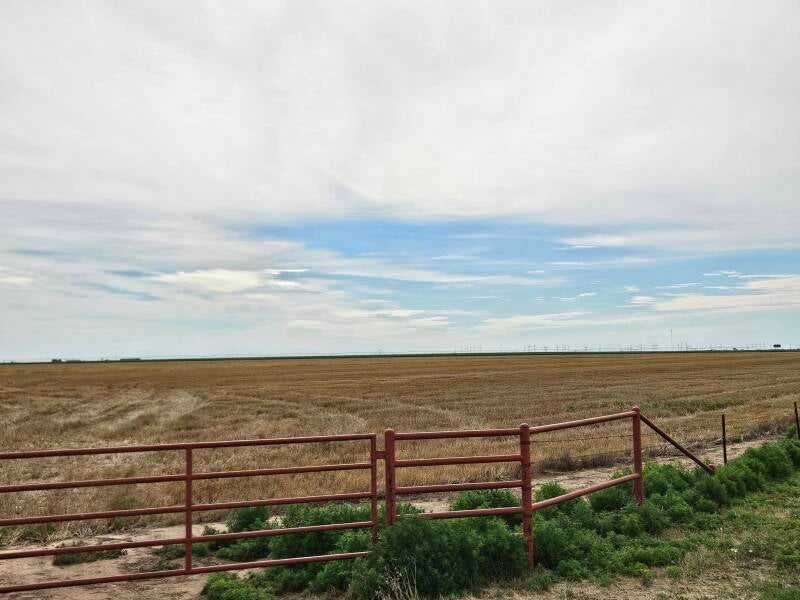
Rural farmland in the Texas panhandle
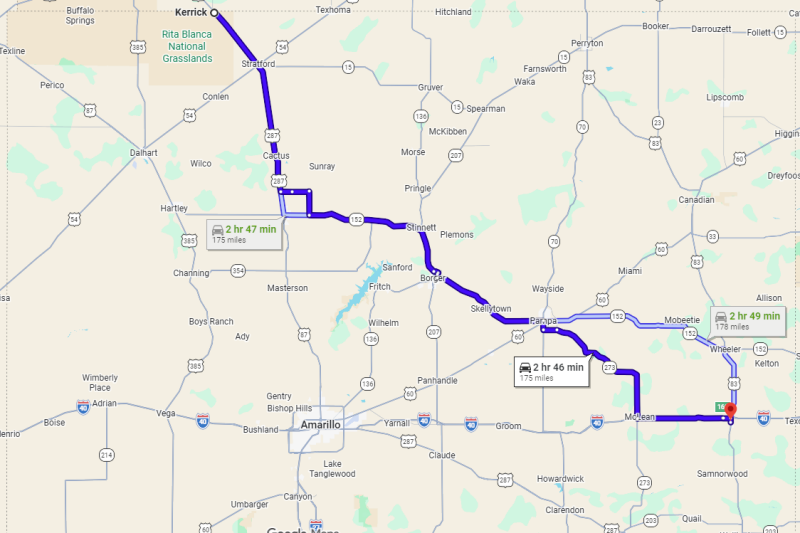
I will always choose driving somewhere over flying or cruises. There is a big convenience to flying that driving can't compete with and cannot be denied. If you only have a few days at your disposal, it's hard to drive anywhere that's more than a day's commute away while enjoying your time at your destined location. Flying allows us to get to any Point B from Point A in most cases less than a day. Driving, on the other hand, can take multiple days of eight hours or more depending on where Point B is. Not to mention driving long distances requires a certain level of patience in a world that expects instant gratification. If you're not willing to take your time to get somewhere, the road will only become wearier the longer you're driving. As much as I love driving, I have felt the sense of dread at times. The panhandle of Texas has been the most dreadful region I've ever driven across. I've driven across a grand portion of the Great Plains, but Texas takes the cake. The panhandle isn't big compared to the rest of the state, yet somehow it puts the saying "everything is bigger in Texas" into full context. Amarillo is still two hours from the Oklahoma panhandle, and in a rural desolate land like the panhandle of Texas, two hours feels like four when the only thing there is to look at is farmland and windmills, with a few towns scattered about. To provide more context, below is a picture of the two routes across the panhandle I've driven myself.

Instant gratification and patience are two things that do not go hand in hand. In today's society, we have been spoiled by technological advancements in travel, communication and purchasing power that can be accomplished on a small computer that can fit in your pant pocket or around your wrist. Even as recently as the early 2010's, it wasn't unusual for someone to not own a cellphone. To go further with this, the concept of a touchscreen phone was still relatively new then. Flip phones were being sold even as recently as 2020. If you know where to look you can find flip phones, but they're becoming an endangered and nearly extinct piece of software as we continue to make advancements in technology. It's not only phones that have rapidly advanced over the last decade. Modern day cars have so many gadgets attached to them too. From the steering wheel alone, we can set our cars to cruise at a set speed of our desire and press a single button to make phone calls, as well as many other things. And that center console is essentially a tablet attached to the car keeping us connected to the world around us, as well as our playlists and podcasts.
All of these advancements leave us wanting one thing: more. We want more things that are even bigger and better right now. Businesses know this, too. They don't allow for products to settle on the shelf for a few years to be enjoyed. Instead, they work years ahead of scheduled releases and release something new every year advertised as better than the last product. We as a society lap this stuff up and don't give it a second thought. It may not always be related to wanting a new product but rather wanting a current product to simply be reliable. Take the internet for example. The internet is not an old asset, but it isn't exactly young either. We've come a long way with fiber optics and wi-fi connectivity over the last decade, yet it's not a perfect tool. The internet occasionally loses service for lengthy periods of time for a number of reasons. When we lose access to it, doesn't it feel like for a brief moment our world is coming to a crashing halt? Our lives depend on internet connectivity so much today that it's difficult to imagine a world without the internet. I have a difficult time believing that the founding fathers could've begun to imagine where the world would be in 250 years while they were handwriting documents and delivering mail via horses and stagecoaches.
Back in the early years of the United States, long distance communication could take days or weeks, even months, for the sender to hear a response back. Today we get responses almost immediately, and not always from another human. You can't contact service providers online or by phone without a robot greeting you anymore. Granted we still have human operators on the other end ready to help further than what the robot can do, but how much longer will that be in play for us? It's crazy watching where the world around us is heading in this manner. As a young zillennial, people assume that I'm tech savvy and capable of operating AI tools and other pieces of technology. I can assure you, I am far from it. In fact, I feel more like a boomer in the sense that all of these technological advancements are too much for me to grasp the concept of. I like to be in control, and I definitely don't like technology trying to do everything for me. I can't tell you how infuriating it is for me to run through mazes just to talk to another human being when I need assistance with a product. Just the other day when I was filing my taxes for the year, when I clicked on the "help" button for support, the AI chat box was unable to connect me to a human operator when I asked for one! How times have changed over the course of a year.
I went on a tangent there, but I promise there's a point to all of this. Techn0logical advancements have provided us with instant gratification as developers continue to make better products for consumers. As a result, the concept of waiting patiently for anything feels as if it's becoming an extinct social norm. The one exception to this rule is ordering food service or groceries through an app since someone has to make the delivery happen one way or another. But even then, those apps give the consumer an estimated time of arrival to the front door or for pick up. And if that arrival is even a minute late most of us grow impatient with whoever is easiest to put the blame on in the moment. I am guilty of this myself, as I'm sure most of us who utilize these services regularly are.
This is why I believe that in a world taken over by instantly gratifying services we need to make an effort to bring back some simplicities in our everyday lives. I think it starts with disconnecting from the digital world while we're out in public. I don't mean a total disconnect, but out of basic human decency whenever you're out with friends and family in any setting, put away the phone and enjoy each other's company. Talk about your days and weeks, reminisce on old times, share some laughs, and most importantly, be present in the conversation! When you ask each other how you're doing, be engaged and listen to what they have to say. Don't ask the question just to make conversation; ask the question with follow-up questions. Talking to people face to face is a treat in a digitally centric world. This should be the norm when we're out with friends and family to begin with. Put the phone away for a few hours and genuinely spend time with each other. Your social life will still be accessible when you return to the digital world. Balance is key in a rapidly advancing modern-day world.
Add comment
Comments