Traveling Tips
Every trip begins with a plan. From cost breakdowns on lodging, airfare and gas, travel is not a cheap expense. With effective planning, however, costs don't have to break the bank.
It's also important to manage your time in a way that doesn't break you down mentally. Learning proper time management can save you the stress of trying to beat the metaphoric clock.
Mileage Math
If you need help planning your driving time, here is a basic ESTIMATED MINIMUM TIME guide to follow in planning your trip.
Average Speed Limit on Highway = 70 mph
100 miles/70 mph = 1 hour & 25 minutes
Example: Philadelphia to Baltimore (102 miles)*
1 15-minute stop/2 hours driving
1 30-minute stop/4 hours driving
500 miles/70 mph = 7 hours & 15 minutes + 60 total minutes of breaks = 8 hours & 15 minutes for the day
Example: San Diego to San Francisco (507 miles)*
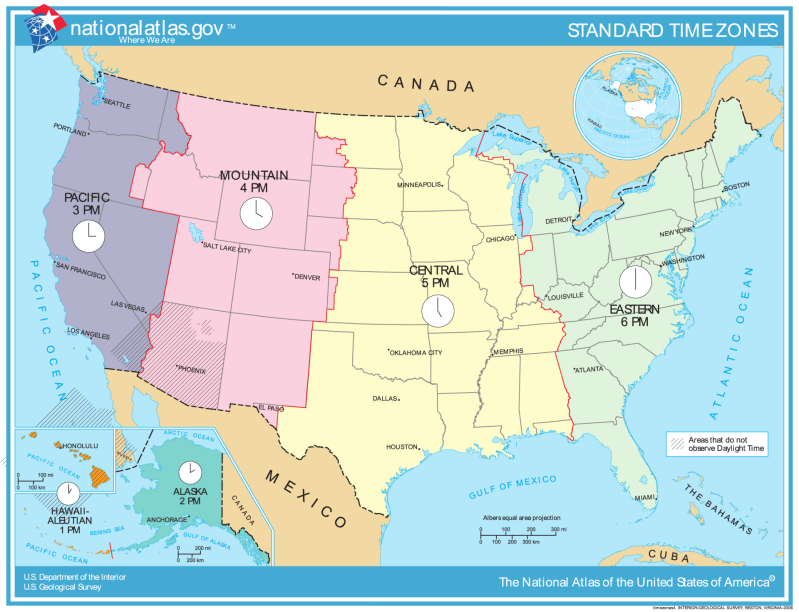
Time Zone Differential = +/- 1 hour
Eastbound = +1 hour
Westbound = -1 hour
Example: Las Vegas to Denver (750 miles, 10 hrs & 25 minutes)*
10:25 + 1:00 = 11 hours & 25 minutes
11:25 + 2:30 = 13 hours & 55 minutes
Vice Versa: Denver to Las Vegas (750 miles, 10 hrs & 25 minutes)*
10:25 - 1:00 = 9 hours & 25 minutes
9:25 + 2:00 = 11 hours & 25 minutes
*Traffic and other uncontrollable factors are not included. Times were calculated through Bing Maps directions.
United States Time Zone Map
10 Safety Rules on the Road
These rules mostly apply for road trips, especially those that stretch across multiple days.
1. Follow the rules of the road. Some rules are universal, while some places have additional rules that you may not be aware of.
2. You're not the only driver on the road. Treat yourself and others with respect.
3. Keep your phone out of your hands while the car is moving. If you need to check your phone, pull over in a safe place away from busy roads if possible.
4. Pay attention to your vehicle. If you hear or feel something unusual, pull off to the side of the road where it's safe to investigate.
5. If you feel sleepy, get off the road at the nearest exit or rest area and park the car. If you're alone, take a 30-minute break. Take a 20-minute nap and another 10 minutes to walk around and stretch your legs. If you have another legal driver in the car, let them take the wheel if they're in a good driving state.
6. Stop regularly. It's not a race to get to your destination. Stop at a minimum every 2 hours for 10 minutes.
7. If more than 2 people are in the car, the front seat passenger needs to stay awake with the driver.
8. Purchase roadside assistance before your trip. You never know what could happen to your vehicle. Most insurance companies provide this service for an extra charge to your policy.
9. Refill your gas tank between 3/8 and 1/4 line at least.
10. When you end your day, give yourself at least 8 hours of rest before getting back on the road. Proper rest keeps you and everyone else safer.
Frequently Asked Questions
Here are a few things to consider when planning your adventure.
What's the best way to save money for the trip?
I have found that lodging reservations will be your best friend over time. If you already know where you're planning to visit months in advance, paying for your lodging accommodations beforehand will give you extra money for the trip itself. While this isn't always true, it is usually less expensive to make a reservation three months out versus one week out. If you are able to, you will want to select the choice that gives you a refund if you cancel before the cancelation date as itinerary can change beforehand.
How early should I arrive at the airport?
If you're flying domestically, ticket counters open anywhere from two to three hours before the flight takes off. I would strongly suggest arriving at the airport two and a half hours before your flight. This gives you enough time to find parking, check your luggage (if you have any) at the ticket counter and get through airport security. For international flights, ticket counters open three hours before the flight. You will want to arrive three and a half hours before takeoff for the same reasons listed for domestic travel.
How many hours should I drive in one day?
This is a tough question to give a straight answer to since everyone is different in terms of what they can and can't handle safely. If you're alone, anything beyond 5 hours can become a long day. If you have other people in the car who can drive legally, it's much easier to split the driving load amongst each other. I had to build my stamina for longer days of driving. There was a time when driving for an hour was tiring for me, but now I can handle driving more than 10 hours in one day if I needed to. The stamina comes with practice, but not everyone has the stamina and attention span for long stretches of driving after practice. Before you embark on a multi-day road trip, drive somewhere a few hours away and back in one day and see how you handle it over time. If you have companions in the car, I recommend shifts between two and four hours at a time. This gives each person a chance to sleep in the backseat but also stay awake long enough to be ready for their shift.
How frequently should I get out of the car?
I tend to treat driving days like workdays. About every hour and a half to two hours, I will pull off at a rest stop and walk around, go to the restroom and maybe eat a granola bar or something light to keep my energy stable. To add to this, I look for roadside attractions where I can stop for about half an hour or more. This allows me to walk around and keep myself awake while also enjoying the sites and learning something new. Parks, museums and grocery stores or shopping malls are great places to plan stops along your route for this reason. I also avoid eating big meals until I get to my stop for the day. I have found that I am less tired during the drive if I stop at a gas station for a quick snack in lieu of finding a place for a traditional breakfast or lunch.
What's the best place to look for lodging?
I like to use Booking.com, but there are plenty of businesses out there at your disposal. I have found that looking at direct hotel sites tend to charge more than going through Booking.com or even VRBO and Airbnb. Booking.com has fair prices and cancelation policies as well, allowing you to cancel up to five days before your stay for a full refund.
Fly or drive?
I am biased towards road trips, so that will always be my answer if you're traveling domestically. Driving is cheaper than flying these days as well. There is a convenience to flying if you only have a few days to be somewhere, but if you can afford to take a week or two, drive and see the sites along the way.
According to GasBuddy, the average cost of fuel is $2.82/gallon.
According to Edmunds, the average amount of gallons of fuel in a car is 14 gallons.
2.82 x 14 = $39.48/fill up
According to the Bureau of Transportation, the average cost of domestic airfare is $386 and $1,217 for international airfare.
10 trips to the gas station at $39.48 = $394.80
More questions?
Please feel free to reach out by filling out the form below. I will respond in 24-48 hours.